Structured creative programs,
built for real rooms.
Facilitator-led programs grounded in the E.P.I.C. Framework™. Designed to flex to the age, size, and setting of your group, and delivered by someone trained and cleared to be there.
Cleared
Background-checked and Mandatory Reporter certified before entering any room.
Trauma-Informed
Youth Mental Health First Aid certified; expressive arts and CRM training underway.
Non-Clinical
Facilitation, not therapy. We complement your counseling staff, never replace them.
Insured
General liability coverage carried for every engagement.
The Flagship Program
The Inner Rhythm Project™
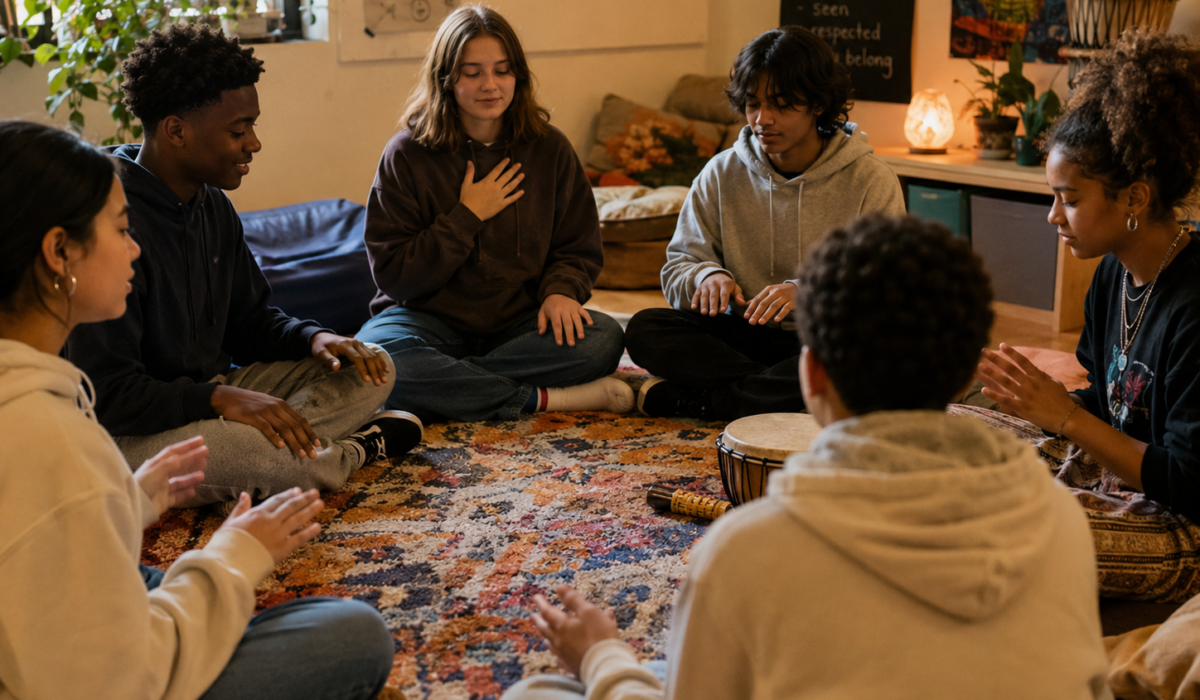
A six-session series for teens that uses music and rhythm as tools for emotional regulation. Students learn to recognize what’s happening in their own nervous systems and to steady themselves, using the language of sound rather than the language of the clinic.
Sessions 1–2 · Recognize
Students build a vocabulary for internal states and learn to notice what their bodies are doing before they can name why.
Sessions 3–4 · Regulate
Rhythm and movement become practical tools. Repeatable techniques students can use outside the room, without equipment.
Sessions 5–6 · Reclaim
The work turns outward: expression, group creation, and a closing session that reframes what they love as a compass for who they're becoming.
AGES
13–18
Group size
8–16 students
Session length
90–120 minutes | 4hrs
Duration
6 weekly sessions | One time event
The shape of a session
Predictable by design
Predictability is a safety feature. Students always know what is coming, which is what makes it possible for them to take a risk in the middle of it.
01
Arrive
02
Notice
03
Make
The core creative work: sound, movement, art, or story, depending on the program
04
Reflect
05
Close
What I'm focused on now
Predictable by design
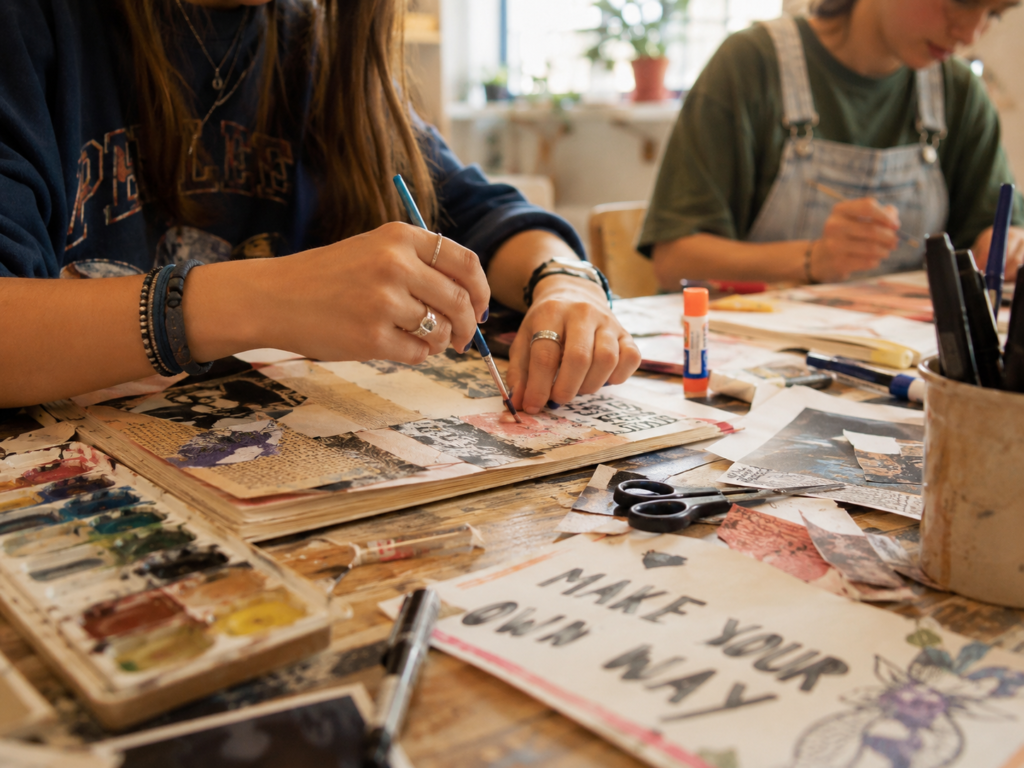
Healing Through the Arts Lab™
A flexible, multi-modal workshop using visual art, movement, and improv to help young people externalize what's hard to say out loud.
Schools integrating creative wellness · Ages 13–18
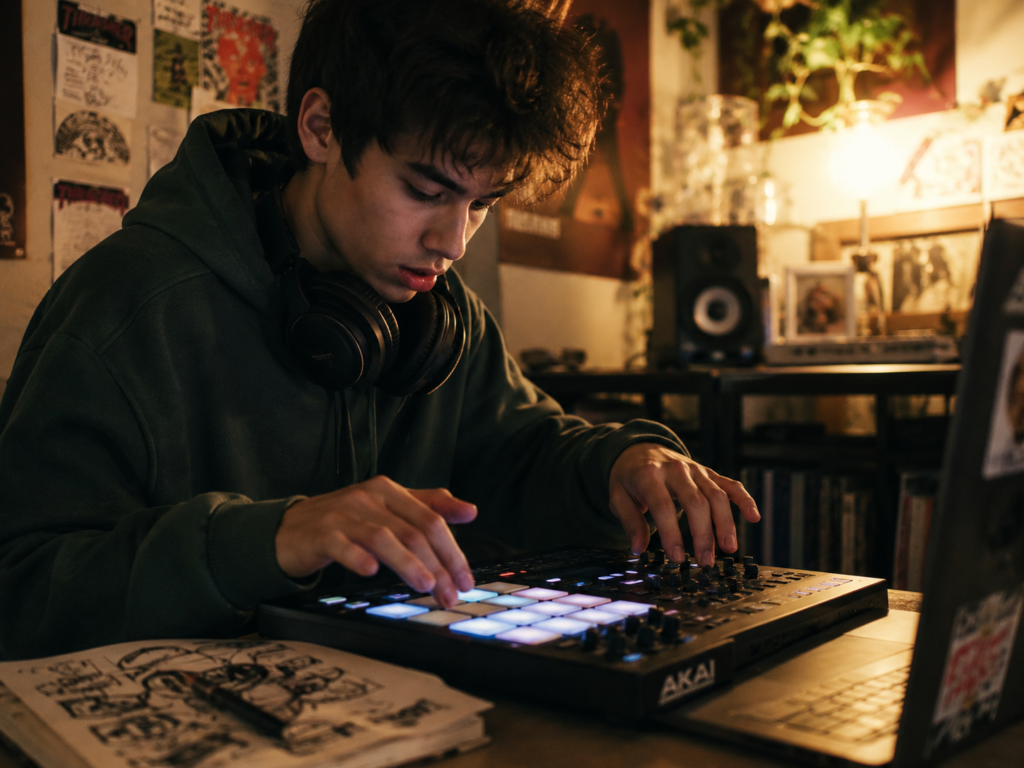
Find Your Frequency™
An identity-and-voice workshop helping teens locate their own signal in a noisy world, and express it with confidence.
Youth organizations · Ages 13–18
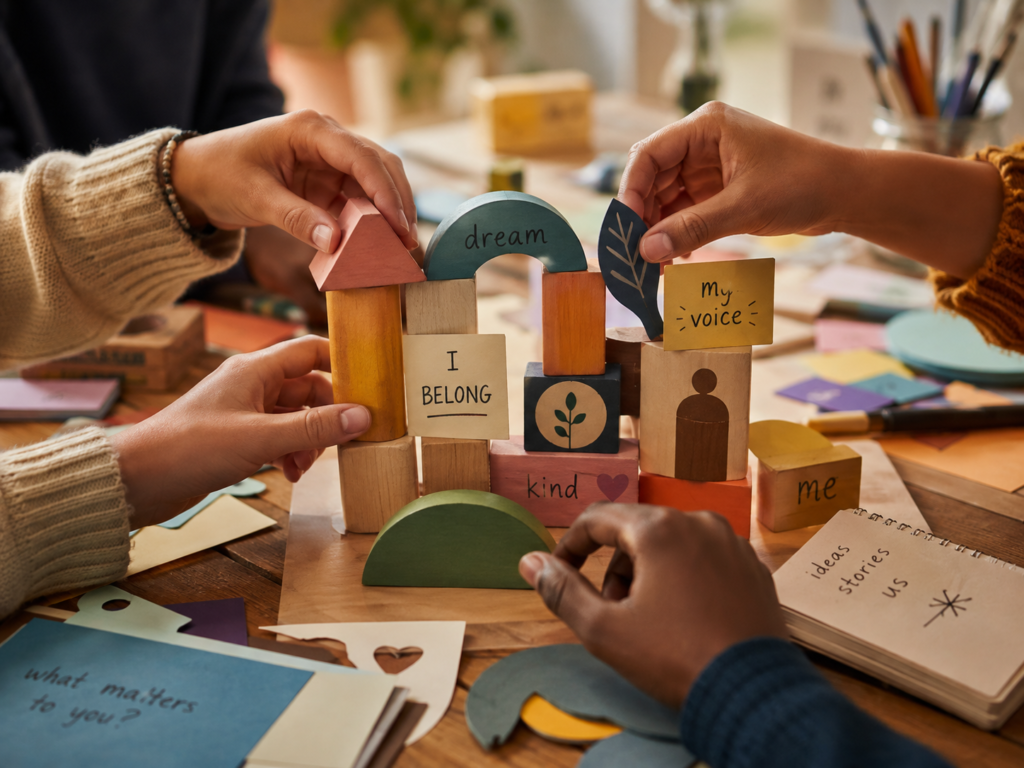
The Architecture of You™
Design thinking meets self-discovery. Students build a representation of their identity, reframing who they are beyond diagnosis or circumstance.
Schools & youth programs · Ages 13–18
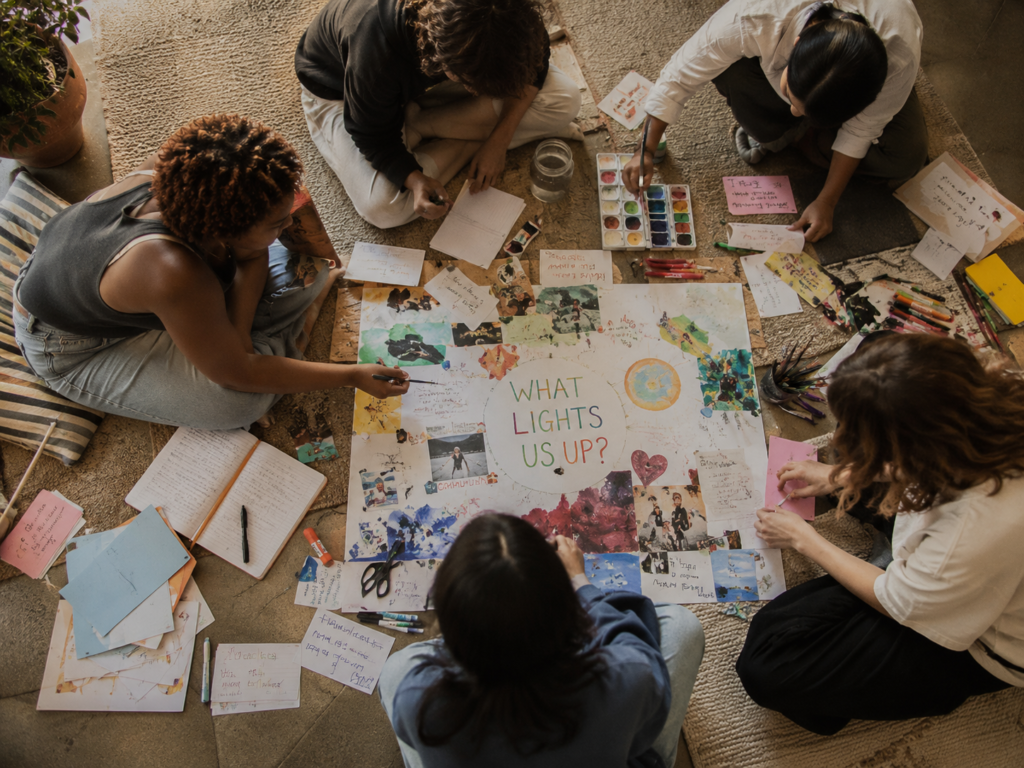
Creative Resilience Circles™
Small-group circles using creative practice to build resilience and connection in a low-stakes, high-support setting.
Community & single-parent programs · Ages 13–18
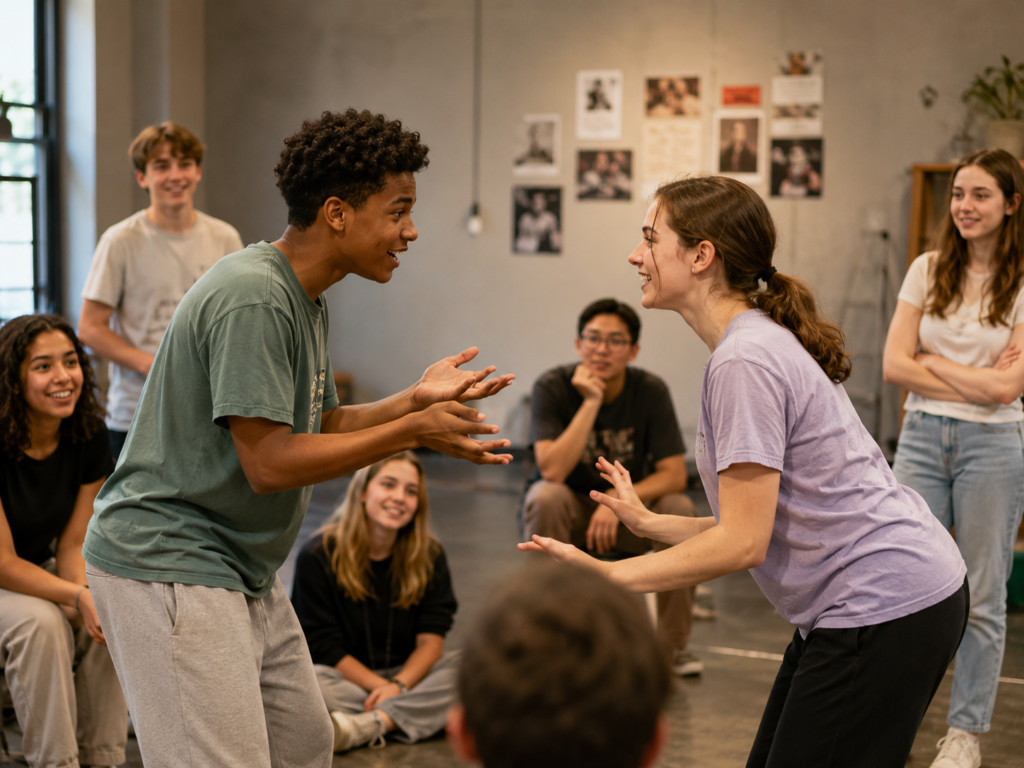
Performing from the Inside Out™
A confidence-and-presence workshop using performance and improv to help young people practice showing up, responding instead of reacting.
Teens & youth orgs · Ages 13–18
Something else?
Programs are shaped to the room. If your students need something these don't cover, that's a conversation worth having. Custom engagements are welcome.
Custom · Built with you
How Engagements Work
Three ways to bring this in.
Single Workshop
Multi-Session Series
The full arc. Skills build on each other and trust has time to develop. This is where the real change happens.
Ongoing Partnership
Logistics, plainly.
What we bring
All facilitation, curriculum, and program materials. Instruments and art supplies are provided unless your site already has them.
What you provide
A room that can be closed, chairs that can be moved into a circle, and one staff member present for the session.
Staff presence
A staff member from your organization stays in the room for every session. Always. This protects your students and your facilitator both.
Referral pathway
Before programming begins, we agree in writing on who a student is referred to if something surfaces that belongs with your counseling team.
Consent & permissions
We follow your organization's existing permission process. No photography or student work is shared publicly without written consent.
Getting started
A conversation, then a written scope with dates and cost. Most engagements are confirmed 4–6 weeks out.
Outcomes & Measurement
What we track, and what we report back.
What students build
- Language for internal states they previously couldn't name
- Repeatable techniques for steadying themselves without equipment
- Group skills — listening, contributing, repairing
- A creative practice that outlasts the program
What you receive
- Pre- and post-program student self-assessment data
- Attendance and engagement summary by session
- A written close-out report you can share with leadership or funders
- A debrief conversation with your staff on what we observed
For Schools
Built to support your counseling team, not add to their load.
Fits your existing structures.
Runs during advisory, elective blocks, after-school, or as a pull-out group — whatever your schedule allows.
Supports SEL and MTSS goals.
Programming maps to social-emotional learning objectives and functions as Tier 1 or Tier 2 support depending on how you deploy it.
Complements counseling, never replaces it.
We are non-clinical facilitators with a written referral protocol agreed with your team before we start.
No added staff burden.
We bring the curriculum, materials, and facilitation. Your staff member is present, not planning.
Reportable outcomes.
You receive pre/post data and a written report suitable for district leadership or grant reporting.
Cleared and insured.
Background check, Mandatory Reporter certification, and general liability coverage documented before the first session.
For Partners & Funders
Underwrite a room full of young people.
Not every school or community program has budget for enrichment and those are frequently the young people who need this most. Partner support is what closes that gap. When a funder underwrites programming, a site that couldn’t otherwise afford it gets a full series at no cost to families.
What partnership makes possible
- Sponsored programming at Title I schools and under-resourced youth organizations
- Materials and instruments for sites that have none
- Expanded access, more sites, longer series, deeper work
- Staff training so the capability stays with the organization
What you receive: a written report on the programming your support funded, sites served, students reached, outcome data, and the story of what happened in the room. We take stewardship seriously and report back without being asked.
Common Questions
What people ask first.
Is this therapy?
No. This is non-clinical, facilitation-based creative programming that builds emotional skills. We are not clinicians, we do not diagnose or treat, and we have a written referral protocol for anything that belongs with your counseling team.
Does a student have to be struggling to join?
No. There's no diagnosis, referral, or crisis required. The work is preventive and universal — it's for any young person carrying something, which is all of them.
What if a student discloses something serious?
We follow mandatory reporting law and the referral pathway agreed with your organization before programming begins. Your staff member present in the room is part of that process.
Do students have to perform or share?
Never. Participation is always invited, never required. Presence counts as participation, and sessions are structured so no one is put on the spot.
Do we need a music room or art supplies?
No. We bring what's needed. All you need is a room that can be closed and chairs that can move.
How much does it cost?
It depends on format, group size, and number of sessions. We'll give you a written scope with clear pricing after an initial conversation and we'll help you look at funding pathways if budget is the obstacle.