Creativity regulates.
We teach young people how.
Our mission
To make emotional education as common as math
and as creative as art.
Why we exist
Every young person carries more than they can name.
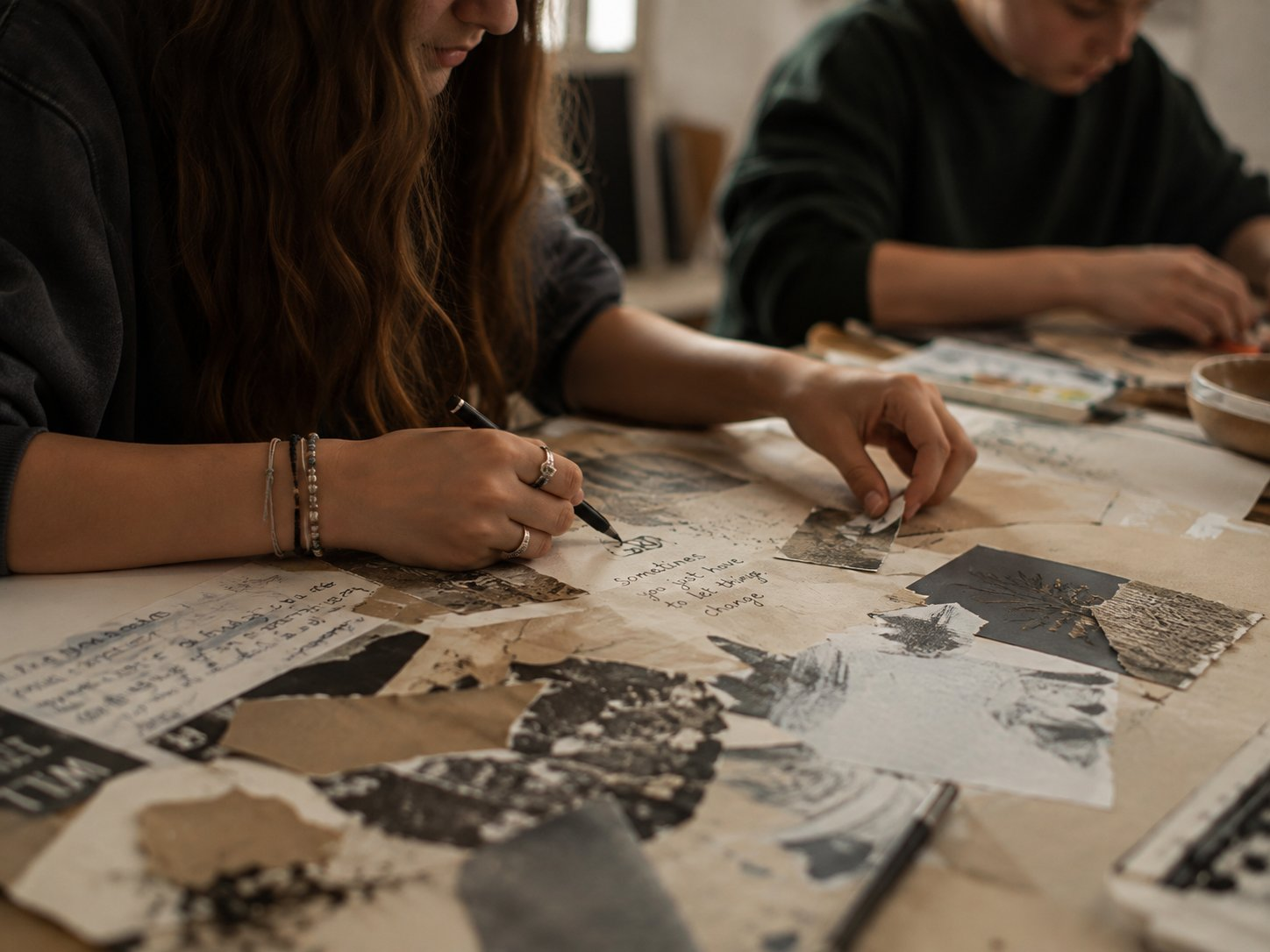
The support that does exist is usually built for crisis, you have to be struggling badly enough to qualify for it. That leaves out most young people, most of the time. The ones who are functioning but exhausted. The ones carrying grief nobody knows about. The ones who would never walk into a counselor’s office but will absolutely stay after school for a room with a drum kit in it.
The Embodied Creative exists for those young people. We give them a way to work with what they’re carrying not by talking about their feelings, but by making something with them.
Our framework
The E.P.I.C. Framework™
Four capacities, woven into every program. Not taught as lessons but rather built into the making itself, so young people practice the skill instead of hearing about it.
EEmotional Intelligence
P
Physical & Somatic Awareness
The body keeps the score. We teach it new rhythms. Participants learn to notice what’s happening physically and to use movement and breath to shift it.
I
Interpersonal Skills
C
Creative Expression
The need
The Why creative, and why now.
What schools are facing
Counselors and youth workers are carrying caseloads far beyond what any one person can hold, and the referral pathways they’d normally use are backed up. What they need isn’t another crisis service. It’s upstream programming that builds skills before a student reaches the point of referral.
Why the arts reach them
Creative expression bypasses the part of a conversation where a teenager decides whether to trust you. Rhythm, movement, and art give the nervous system something to do while the mind catches up and they carry no stigma. Nobody feels labeled for joining a music workshop.
In plain terms
What this actually is.
What we do
Trauma-informed expressive arts facilitation with structured group programs using music, rhythm, movement, visual art, and improv to build emotional regulation skills.
Who we serve
What it is not
Who can join
What they leave with
How the work sounds
Reading the room.
Clinical language rarely lands with teenagers. So we teach nervous-system states through the language of a DJ reading a crowd using a vocabulary they already find compelling, mapped onto something they usually find alienating.
Feedback Loop
Fight
The Skip / The Fade
Fight
Dead Air
Freeze
Playing to the Room
Fawn
Who this is for
Built for the people already doing this work.
Schools
Middle and high schools looking to add creative wellness programming that supports counseling staff rather than adding to their caseload.
Youth Organizations
After-school programs, summer programs, and community youth orgs that want structured, framework-based enrichment with real developmental outcomes.
Community Programs
Single-parent programs, faith communities, and neighborhood organizations serving families who deserve access to this work regardless of what they can pay.
Funders & Partners
Foundations and mission-aligned partners investing in youth mental wellness, creative access, and upstream prevention.
Educators & Staff
Professional development for the adults in the building — the same regulation skills, taught to the people holding the room every day.
The Young People
Anyone between roughly 11 and 18 who is carrying something. That's the whole eligibility criteria.
Teens are the center of this work. Everything else, the school partnerships, the funding, the frameworks, exists to get a well-prepared adult into a room with young people and the right tools. That’s the entire point of the organization.
Our commitments
What we promise the communities we serve.
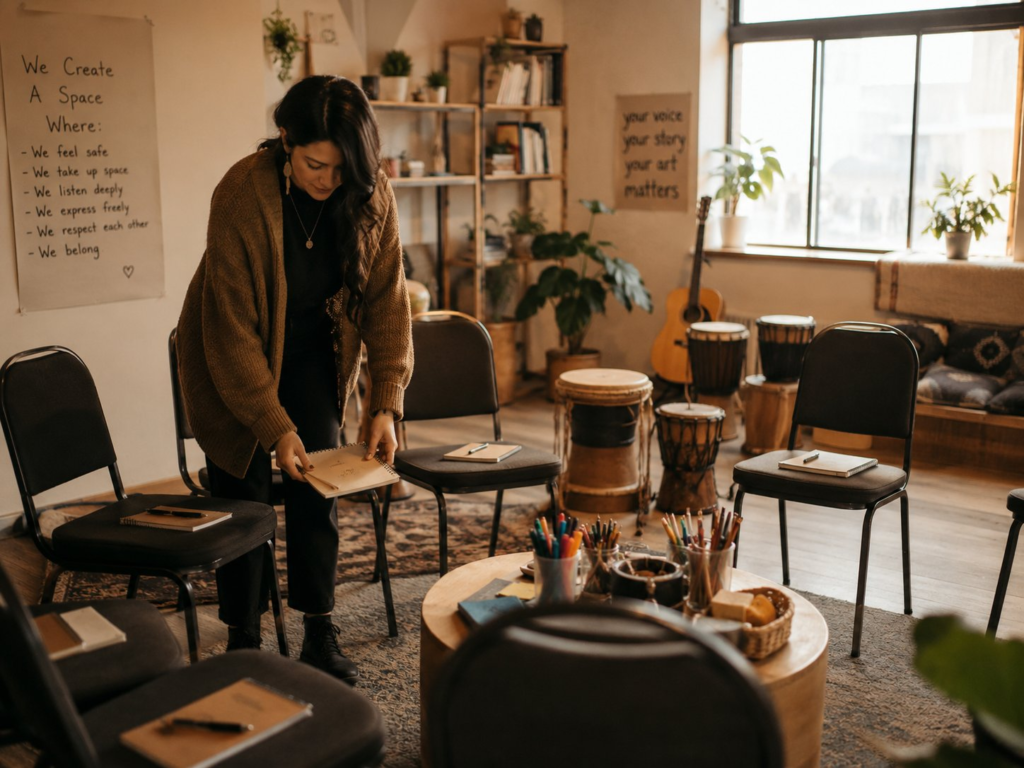
01
Safety first, always.
Every facilitator is background-checked and trained in mandatory reporting before entering a room. Safeguarding isn't a policy documen. It's the precondition for everything else.
02
We stay in our lane.
We are not clinicians and we don't pretend to be. We know what's ours to hold and what needs a referral, and we build those pathways with our partners before programming begins.
03
No young person has to be in crisis to belong.
This work is preventive and universal. A teenager doesn't need a diagnosis, a referral, or a bad week to be welcome in the room.
04
We meet young people in their own culture.
The music, the language, and the references come from the world they actually live in. Respect isn't a value we state, it's a design decision we make in every session.
05
Access matters.
We work with partners to find funding pathways so that cost isn't the reason a community goes without. Where we can, we build sliding scale and grant-supported options into the engagement.
Training & safeguards
Prepared to be in the room.
Child Safety & Compliance
Background checked and certified in Mandatory Reporter training, cleared and prepared to work in schools and youth settings.
Mental Health & Trauma-Informed Training
Certified in Youth and Adult Mental Health First Aid, with trauma-informed expressive arts and Community Resiliency Model training currently underway.
Creative & Somatic Foundation
Certified in sound therapy and grounded in somatic practice, and two decades designing structured, human-centered systems. Now in service of young people.
In the Room
Clear referral pathways established with partner staff before programming begins, age-appropriate content reviewed with the host organization, and session structures designed so no participant is ever put on the spot.
This is non-clinical, facilitation based work: creative programming that builds emotional skills, delivered by someone trained to hold the room with care.
The person behind it
Robin L. Hendrix
The Embodied Creative was founded by Robin L. Hendrix, a design executive, artist, and youth mentor based in the Charlotte region. For two decades Robin built operating systems inside large organizations, the structures that let people do their best work without burning out.
Let's build something for your young people.
Every engagement starts with a conversation about who you serve, what they’re carrying, and what you’re hoping changes. Funding pathways included. We’ll help you find them.